
Field practice
Working slowly, in the places wildlife already lives
Tracking and photographing wildlife takes patience. Most of the work is waiting, reading the ground and letting the animal decide when it is comfortable to be seen.
Seasons and weather
Following the season, not a schedule
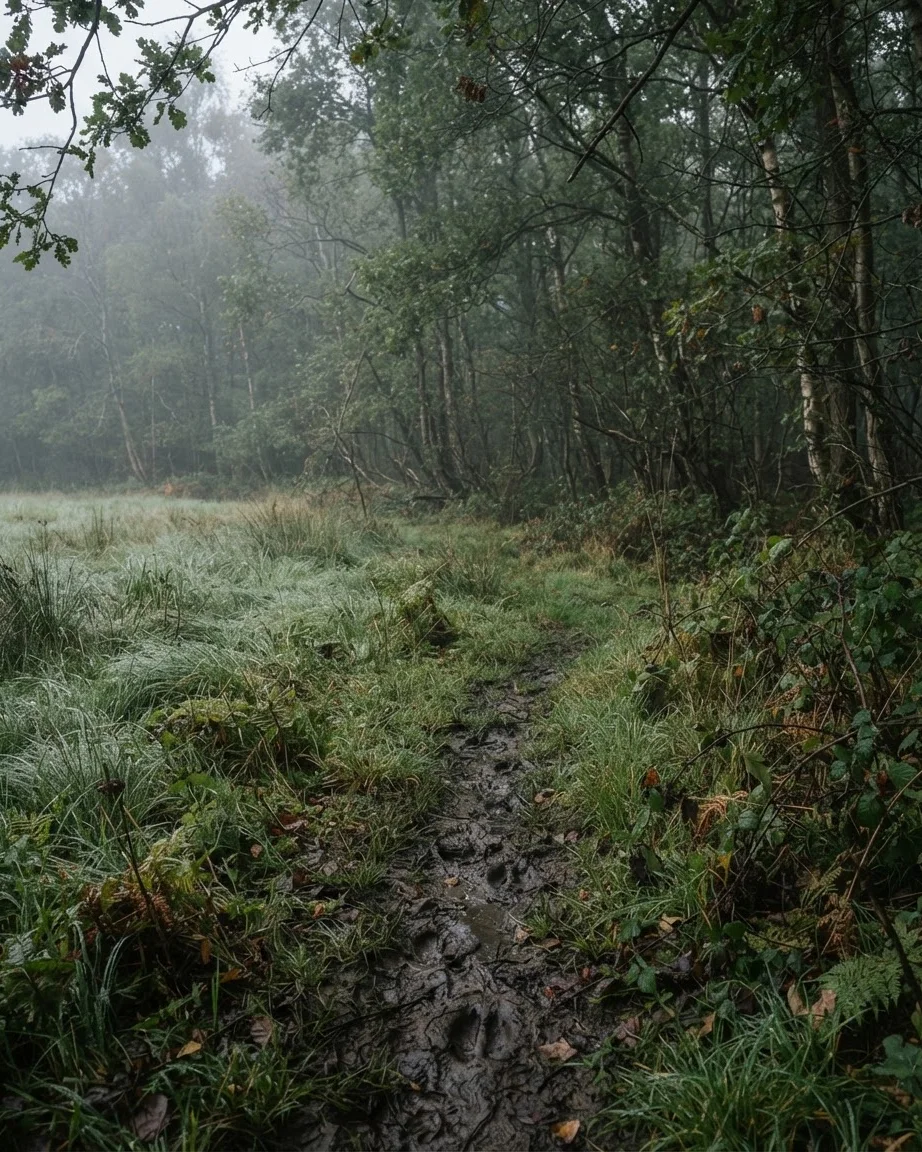
Each season changes where animals feed, rest and move. Tracking means returning to the same stretches of habitat across weeks, noting tracks, calls and signs before any frame is attempted. Overcast mornings, rain and low mist are often the most useful conditions, as they give soft light and quieter ground.
Some days produce nothing usable. Those sessions still count, because they show how the habitat is being used and where it is best left alone.
How the work is done
A field code built on distance
Fieldwork prioritises animal welfare and undisturbed natural surroundings. Observation stays at a respectful distance, using long lenses so that no animal is approached, baited or disturbed to create a picture. Habitat comes first: paths are kept to a minimum and nesting or denning sites are left alone.
Patience and daylight guide every observational encounter. Equipment is kept simple and the long waits are spent on authentic documentary realism rather than staged moments. If an animal changes its behaviour because of the photographer, the frame is not worth taking.